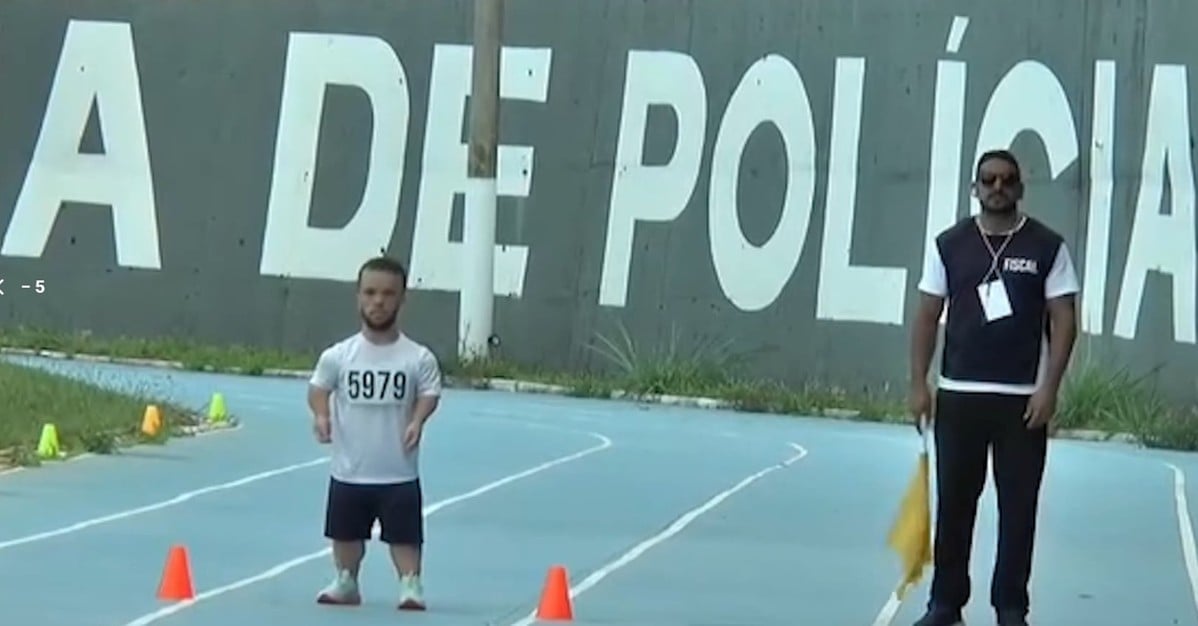
A Dream Deferred: Matheus Matos's Legal Fight Against Discriminação Teste Físico
In a compelling case that has ignited nationwide debate, Matheus Matos, a 25-year-old aspiring police delegate from Goiás, Brazil, is challenging what he describes as blatant discriminação teste físico (physical test discrimination) during a competitive exam for the Civil Police of Minas Gerais. Matos, who lives with achondroplasia, the most common form of dwarfism, had meticulously prepared for years to achieve his dream. He successfully navigated the rigorous theoretical stages of the selection process, including objective, discursive, and oral examinations, only to face an insurmountable barrier at the Physical Aptitude Test (TAF) due to a lack of legally mandated adaptations for his condition.
Matheus's unwavering ambition to serve as a police delegate has been the driving force behind his academic and professional journey since he began his Law degree in 2019. He never considered an alternative career path, dedicating himself entirely to this singular goal. His success in the demanding written and oral stages of the highly competitive exam, organized by the Fundação Getulio Vargas (FGV), speaks volumes about his intellectual capabilities and dedication. However, the dream encountered a severe setback when he was eliminated during the TAF, specifically because the required adaptations for candidates with disabilities were allegedly not provided.
The core of the issue lies in the TAF's universal application of physical parameters. For instance, one test required a minimum horizontal jump of 1.65 meters – a standard applied uniformly to all candidates, irrespective of their physical characteristics. Despite formally informing the organizers of his condition and requesting reasonable adaptations in accordance with legislation designed to protect persons with disabilities, Matheus's plea reportedly went unanswered before the test's execution. This rigid adherence to a 'one-size-fits-all' approach, without considering individual needs or legal provisions for inclusion, forms the heart of the discrimination claim, prompting a crucial discussion about accessibility and fairness in public sector recruitment.
The Legal and Ethical Imperative for Adaptation in Public Concursos
Matheus Matos's case is not merely about an individual candidate's elimination; it spotlights a systemic challenge within Brazil's public competitive examination system, particularly concerning discriminação teste físico. Brazilian law, including the Brazilian Inclusion Law (Lei Brasileira de Inclusão da Pessoa com Deficiência - LBI), and international conventions such as the United Nations Convention on the Rights of Persons with Disabilities (CRPD), unequivocally mandate equality of opportunities and the provision of reasonable accommodations for persons with disabilities. These legal frameworks aim to dismantle barriers that prevent qualified individuals from accessing public sector roles, recognizing that true equality often requires differentiated treatment to achieve equitable outcomes.
The principle of "reasonable accommodation" is central here. It refers to necessary and appropriate modification and adjustments not imposing a disproportionate or undue burden, where needed in a particular case, to ensure persons with disabilities the enjoyment or exercise on an equal basis with others of all human rights and fundamental freedoms. In the context of a TAF, this could involve adapting the method of execution, adjusting parameters based on biomechanical differences, or offering alternative exercises that assess the same physical capacity in a functionally equivalent way. The goal is to evaluate the candidate's actual aptitude for the essential functions of the job, rather than inadvertently excluding them due to non-essential physical criteria.
However, the response from the organizing body, FGV, stated that the bio-physical examinations followed the rules stipulated in the edital (public notice) and that there was no provision for adapting the stage to individual candidates' conditions. This stance highlights a fundamental conflict between legal mandates for inclusion and the operational realities or interpretations of examination regulations. It raises critical questions about whether edital provisions can override broader human rights laws and whether a lack of explicit "provision for adaptation" in an edital is itself a form of indirect discrimination.
When an adaptation is denied in such critical stages, it can directly contravene disability rights. For a deeper dive into the legal implications and recourse available when such denials occur, explore our related article: Concurso TAF & Disability Rights: When Adaptation Is Denied.
Beyond Individual Cases: Unveiling Structural Barriers to Inclusion
The ripples of Matheus Matos's experience have extended far beyond his personal battle, engaging national disability advocacy groups and sparking a broader dialogue about inclusion in public service. The Associação Nanismo Brasil (Anabra) and the Instituto Nacional de Nanismo have both voiced strong criticisms, asserting that Matheus's elimination, without due adaptation, underscores a significant structural problem regarding the inclusion of persons with disabilities in public competitive exams.
These entities argue that demanding identical physical criteria from candidates with and without disabilities, especially in cases like dwarfism where physical stature inherently differs, can create an exclusionary environment rather than promoting true equality. They emphasize that the suitability for a role such as a police delegate should be assessed based on the essential functions of the activity – intellectual capacity, problem-solving skills, legal knowledge, communication abilities, and the capacity to perform tasks relevant to the role – rather than arbitrary physical benchmarks that may serve as insurmountable barriers for qualified individuals with disabilities. What are the core duties of a delegate? Is a specific horizontal jump distance truly essential, or are there other ways to assess relevant functional fitness?
The institutions advocate for a paradigm shift, urging public concursos to adopt individualized assessments for candidates with disabilities. This approach would ensure that evaluations are tailored to assess a candidate's genuine ability to perform the job's essential functions, thereby guaranteeing equal conditions and access to public positions. This is a critical step in moving beyond mere compliance with quotas to fostering a genuinely inclusive public service workforce that reflects the diversity of society.
The challenge of adapting physical tests for candidates with disabilities in concursos is complex but vital for achieving true inclusion. For more insights into this broader issue, refer to our article: Inclusion Challenge: Adapting Physical Tests for PCDs in Concursos.
Reforming TAFs: A Path Towards True Equality
The case of Matheus Matos presents a pivotal opportunity for public examination boards to re-evaluate and reform their TAF methodologies. True equality in a TAF doesn't mean treating everyone identically; it means providing equitable opportunities that account for individual differences while upholding the integrity of the job requirements. This involves designing tests that are functionally relevant to the specific role and adaptable to diverse physical capabilities.
- Focus on Functional Relevance: TAFs should assess capacities directly linked to the essential duties of a police delegate. If a specific physical feat is not absolutely essential for the safe and effective performance of the job, it should be re-evaluated or adapted.
- Expert Consultation: Concurso organizers should collaborate with medical professionals, physical therapists, biomechanical experts, and disability advocacy groups to develop fair and scientifically sound adaptations. These experts can help determine alternative exercises or adjusted parameters that accurately gauge a candidate's functional fitness without discriminating based on disability.
- Individualized Assessments: Where appropriate, individualized functional assessments can be implemented. This allows for a more nuanced evaluation of a candidate's abilities, considering their specific condition while ensuring they meet the required functional standards for the role.
- Transparency and Pre-Emptive Planning: Editals should clearly outline the process for requesting and implementing adaptations, providing detailed information and clear deadlines. Proactive planning for adaptations, rather than reacting to individual requests, can streamline the process and reduce instances of discriminação teste físico.
Practical Steps for Candidates and Concurso Organizers
The ongoing legal battle of Matheus Matos serves as a vital lesson for both candidates with disabilities and the institutions organizing public competitive examinations. Navigating the complex landscape of TAFs requires vigilance, clear communication, and a proactive stance from all parties.
For Candidates with Disabilities (PCDs):
- Thoroughly Review the Edital: Before applying, meticulously examine the public notice for specific provisions related to candidates with disabilities, TAF requirements, and adaptation policies. Note any ambiguities or omissions.
- Document Everything: Formally request accommodations in writing, well in advance of the TAF. Keep detailed records of all communication, including dates, names, content of conversations, and copies of submitted documents. This documentation is crucial if legal action becomes necessary.
- Seek Legal Counsel Early: If your requests for adaptation are denied, ignored, or if you feel the process is discriminatory, consult with a lawyer specializing in disability rights and public concursos as soon as possible.
- Connect with Advocacy Groups: Organizations like Anabra and the Instituto Nacional de Nanismo can provide invaluable support, guidance, and potentially amplify your case.
- Focus on Functional Fitness: While preparing for the TAF, aim to develop functional strength and endurance relevant to the essential duties of the role, rather than solely fixating on potentially discriminatory generic metrics.
For Concurso Organizers:
- Design TAFs Based on Essential Job Functions: Move away from generic physical ideals. Collaborate with job analysts and disability experts to define the actual physical demands of the position and design tests that directly measure these capabilities.
- Implement Clear Adaptation Protocols: Establish clear, transparent, and legally compliant procedures for processing accommodation requests. This includes clearly defined criteria for granting adaptations, a timeline for responses, and an appeals process.
- Train Staff on Disability Awareness: Educate all personnel involved in the TAF process – from administrators to physical evaluators – on disability rights, reasonable accommodation principles, and the legal obligations under the Brazilian Inclusion Law and international conventions.
- Proactive Review of Editals: Regularly review and update edital language to ensure it is inclusive and reflects current disability rights legislation, preventing potential instances of discriminação teste físico before they arise.
- Foster a Culture of Inclusion: Beyond legal compliance, strive to cultivate an organizational culture that values diversity and actively seeks to include qualified individuals with disabilities in the public service.
Conclusion: A Call for True Inclusion in Public Service
Matheus Matos's legal fight against discriminação teste físico is a poignant reminder that while laws for inclusion exist, their practical application often lags. His unwavering dedication to his dream of becoming a police delegate, despite the systemic barriers, embodies the spirit of perseverance required to challenge injustice. This case is not just about one individual; it is a critical juncture for Brazil's public competitive examination system to prove its commitment to genuine equality and accessibility.
Moving forward, it is imperative that public concursos transition from a mindset of minimal compliance to one of proactive and empathetic inclusion. By embracing adaptive testing methodologies, consulting with disability experts, and ensuring transparent processes for reasonable accommodations, examination boards can guarantee that talent, dedication, and the ability to perform essential job functions are the true determinants of success, rather than discriminatory physical barriers. Only then can Brazil truly uphold its legal and moral obligations, fostering a diverse and equitable public service that accurately reflects all segments of its society and ensures that no dream is unjustly deferred.